How to Turn AI from Personal Efficiency into Enterprise Capability Accumulation
2026-08-31
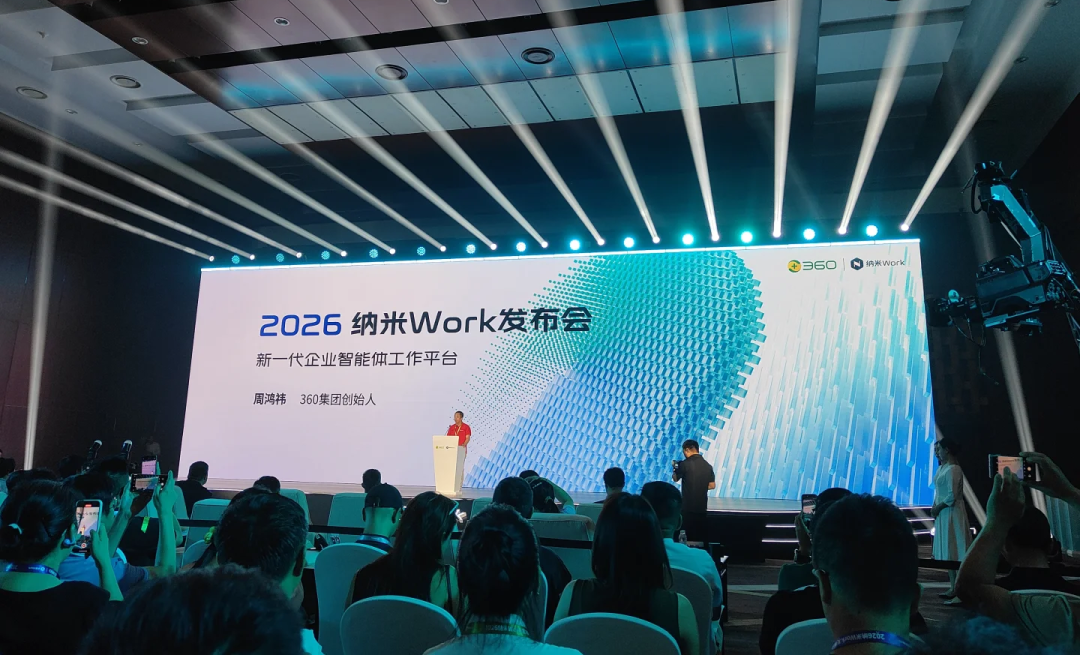
Enterprise capability accumulation, more than any efficiency metric, is what decides whether an AI investment ever reaches the balance sheet. On July 28, Zhou Hongyi, founder of the 360 Group, disclosed at the NanoWork launch event that over the previous thirty days he had personally led the effort to remake 360 using NanoWork, moving through four stages: conception, correction, implementation, and rollout. The initiative brought AI agents into the company’s office network and pushed participation across the entire workforce, with more than fifty product review sessions and 166 rounds of plan iteration along the way. A question he raised at that event applies to every executive already using AI.
AI keeps getting more capable. Has your company actually gotten faster?
Most managers already have a vague answer. Employees genuinely are faster: reports get written faster, materials get organized faster, meeting notes come together in minutes. Zoom out to the company as a whole, though, and delivery cycles haven’t visibly shortened, decisions still pass through just as many layers, and customers notice no real difference. Both observations are true, and they aren’t contradictory – they simply describe two entirely different kinds of things. One is a personal habit. The other is enterprise capability accumulation, and a company only gets to keep the second one.
Efficiency Is an Engineering Metric. It Isn’t Necessarily a Business Outcome.
When an employee who once spent two hours organizing materials now finishes in twenty minutes, that’s efficiency, an engineering metric that can be measured in isolation. It holds true on its own, with no other conditions required. If one person gets faster, that person is simply faster.Business outcomes are a different matter entirely: how many days pass between a customer placing an order and its final delivery, how many weeks a decision takes from the moment an issue surfaces to the moment it is resolved, how long a customer complaint takes to actually get fixed, whether gross margin has moved, whether renewal rates have moved. These are results that belong to a line of business, an organization, a quarter, and they only materialize when many moving parts align at once. That gap between a personal metric and a business result is exactly where enterprise capability accumulation has to do its work.
Kai-Fu Lee put this gap bluntly at a launch event for 01.AI this past July. Over the last two years, he said, large language models swept through isolated corners of the enterprise: customer service, office work, R&D, and once the initial excitement faded, every CEO was left facing the same reality: employees write documents faster, code gets generated faster, but has revenue grown, have costs come down, has cash flow improved? His formula: improvement on the financial statements equals execution efficiency multiplied by decision quality.The formula’s key detail is that it is multiplication, not addition. Double execution efficiency all you like, if decision quality stays flat, the result does not move. An engineering metric can improve dramatically while the business outcome stays exactly where it was, and in practice, that is the norm rather than the exception.None of this makes individual efficiency gains worthless. Less overtime and a better day-to-day work experience are real value in their own right.The limitation is that efficiency stuck at the individual level cannot be treated by a company as an asset, and it cannot be the basis for any business decision. No CEO can tell a board that the company saved an average of eight hours per employee this year and expect that to translate into a plan for next year, because those eight hours never became capacity, never became lower costs, and there is often no reliable way to even trace where they went. Without enterprise capability accumulation, individual speed simply evaporates at the edge of the org chart.Whatever a company is genuinely accumulating shares one trait: it belongs to the company, not to any one individual. A factory belongs to the company. A patent belongs to the company. A customer contract belongs to the company. None of these disappear when a particular person resigns. The AI-driven efficiency gains at most companies today, however, lack exactly that trait. This is the raw material that enterprise capability accumulation is made of.
Individual Efficiency Exists in a Private Form
When an employee uses AI well, it means they have worked out their own method through trial and error. They know how to phrase questions to the model, which tasks it can be trusted with and which it cannot, how to revise its output into something usable, and which situations are not worth the effort at all. The more they use it, the smoother and more personal that method becomes, and it lives entirely on their own computer, in their own bookmarks, as their own habit. None of it has become enterprise capability accumulation yet, because none of it has left that one person’s head.This is the same phenomenon as a veteran employee’s experience living only in their head, only the speed has changed. What once took three to five years to accumulate into a working method no one else could take away now takes about six months.What AI is actually doing inside a company, then, is not solving the old problem of scattered knowledge, it is accelerating it. Six months in, a hundred-person company might have several dozen private methods in circulation, none of the people using them aware of how the others work, with no mechanism to bring them together. The gap between the best of those methods and the worst could be enormous, and the company has no way to tell, because all of them are buried on individual computers.Many companies today are in a state where employees are using AI and executives are using AI, but no company-wide platform or standard practice has been settled on. This is usually read as a safe holding pattern: waiting a bit longer, the thinking goes, costs nothing. That reading misses what is actually accruing, or failing to accrue, while everyone waits: enterprise capability accumulation itself.In reality, every month of waiting lets private methods fork off in one more direction. By the time the organization actually tries to standardize, the starting point has already dropped below zero, because dozens of fully formed private habits now have to be pulled back onto a single line, and people are naturally resistant to giving up something that already works for them. The longer this drags on, the higher that reverse cost climbs.
The Underlying Knowledge That Runs an Organization Has Never Been Written Down
Faced with this problem, a manager’s first instinct is usually self-criticism, the assumption that their own company’s management must be lacking, that documentation was never done properly. That reaction is logical, but it is not quite accurate. In 1911, Frederick Taylor published The Principles of Scientific Management, breaking manual labor down to the level of individual motions, timing each one in seconds, and codifying the results into explicit standards. That approach raised the productivity of manual laborers roughly fiftyfold and stands as one of management theory’s greatest achievements of the twentieth century.In 1999, Peter Drucker published “Knowledge-Worker Productivity: The Biggest Challenge” in the California Management Review, arguing that raising the productivity of knowledge workers would be the most important contribution of the twenty-first century. He was equally clear that the two problems call for entirely different methods, because manual labor has a visible process and a visible output, and knowledge work has neither.Drucker’s judgment still holds today. Precisely because the process of knowledge work resists clear description, most mainstream management methods never really touch it. Management by objectives governs results, KPIs govern metrics, OKRs govern goals and key results, agile governs the rhythm of iteration, and what all these tools have in common is that they manage the two ends of the process while leaving the middle to people.That has been the dominant management approach for the past sixty years, and rightly so, because people really could carry that middle stretch: employees in every role would quietly fill in whatever was not spelled out in their job description, using personal experience and team rapport, keeping the organization’s work running smoothly.That middle layer, the experience and unspoken understanding people bring, the informal rules by which an organization actually runs, was never something management theory seriously argued companies needed to formalize, not in sixty years. That gap is exactly the starting point for enterprise capability accumulation, decades before anyone had a name for it.But now, in the age of AI transformation, more and more companies find they have to do exactly that, because a new kind of employee has joined the company: an AI worker that can only truly integrate into the organization’s work if it is given clear boundaries, rules, knowledge, and objectives, the underlying knowledge and framework a human absorbs by osmosis. This new employee has no way to rely on the tacit understanding and rapport that lets business flow between human colleagues. Giving it that context, in a form it can actually use, is the first real act of enterprise capability accumulation.
What Enterprise Capability Accumulation Actually Looks Like: Three Things
Sharing his view on AI Superpowers, Kai-Fu Lee made the point that today’s models and general-purpose agents are already extremely intelligent, but it’s a bit like hiring Tsinghua’s top graduate straight into your company: on day one, their contribution is close to zero, because they have no idea where the company’s data lives or how its workflows actually run. A brilliant mind is not the same thing as decision-making capability. What closes that gap is enterprise capability accumulation, not a smarter model.That observation gets at something important: what AI lacks was never intelligence, but specific knowledge about the company in question. And that knowledge is currently scattered across a handful of people’s heads, in a form no single document could capture. Once a piece of work has actually been described clearly, a company ends up with three things.The first is a workflow that can actually be stated in words: how a piece of business really moves from start to finish, what information each step depends on, which steps go to AI, which steps require a human to retain judgment, and under what conditions a task has to be handed back to a person. This did not exist before. A company can run for years without a single document that honestly records how a piece of work actually happens.The second is a body of organizational knowledge that can actually be called upon: why a particular customer does not get the standard discount, what unwritten rules govern quoting in this industry, what counts as an exception and on what basis. Content like this used to live only in the heads of a few veteran employees; now it can be written down, retrieved, and kept current as the business changes.The third is a group of people who know how to take a workflow apart. Having gone through the exercise once, the team knows what to ask, what to look for, and where the unspoken details usually hide, and can handle the next process on their own. These three things, taken together, are what enterprise capability accumulation actually consists of.The first two are outputs. The third is a capability. And it is the capability that actually compounds, because an output is only good for the piece of work it describes, while a capability can be applied to everything that comes after. This is what enterprise capability accumulation actually means in practice.Describing 360’s AI transformation, Zhou Hongyi talked about turning the expertise employees train and the methods that get proven out into organizational memory, something that can be shared, reused, and continuously refined. At 01.AI, Kai-Fu Lee calls the equivalent process the digitization of tacit knowledge. What both companies actually do is go beyond recording business outcomes: they mine the specific opinions left in approval workflows and the process data left behind in back-and-forth exchanges between people and AI, converting a veteran employee’s tacit experience into something explicit. The two companies use different vocabulary, but they are pointing at the same thing. Strip away the branding and both are describing the same discipline: enterprise capability accumulation.Workflow descriptions, organizational knowledge, and people who know how to break work down share one more trait: none of them is locked to any particular platform. Whichever large language model a company uses today, whichever one it switches to next year, even if the entire AI market gets reshuffled the year after that, these three things remain a company’s most essential assets. The reverse is just as true: if a company has none of these, it will likely end up with roughly the same result no matter which AI platform it buys.
The Return This Work Generates Goes Beyond the AI Application Itself
Once a piece of work has genuinely been described in full, the spillover value it generates is often worth more than the AI application itself. These are invisible opportunity costs: a manager will never see them on a financial statement, but they are just as real inside the company.When an employee of eight years leaves, a company loses far more than one person. What walks out the door is their understanding of customers, their judgment on how to handle exceptions, the rapport they built with other departments, none of which the company ever actually owned; it had merely been renting that person’s labor for eight years. Whoever replaces them usually needs six months to a year to catch up, and the invisible opportunity cost in that gap is substantial. The dip in quality that comes with staff turnover ends up being absorbed by customers, and it can damage the company’s reputation as well. None of that knowledge had ever been converted into enterprise capability accumulation, so it simply left with the person who held it.Opening a new branch office or a new storefront is easy on the equipment and the process documents, both can simply be copied. What is genuinely hard to replicate is everything the manager at headquarters never wrote down. That is why quality reliably dips during rapid chain expansion: staff training cannot keep pace, and the gap only closes slowly, over time.At most companies, it takes a new hire about six months to get up to speed on the business, and that time is not spent learning official policy, which can be read in two weeks at most. It is spent absorbing the unwritten rules by which the organization actually runs, learning the unspoken understanding involved in handing work off between people, filling in, piece by piece, everything that never made it into the job description.Turnover carries away capability. Expansion cannot be replicated. New hires take too long to ramp up. Each is a different face of the same problem: without enterprise capability accumulation, the organization pays for it again every time.Every manager is well aware of all three, and every manager knows that, in theory, this knowledge ought to be captured. The reason nobody ever gets around to it is a practical one: the return does not justify the investment. Nobody reads the documentation. Nobody uses the SOPs. Knowledge management systems get built, then abandoned, then built again, nearly every company that has tried this has had the same experience. What AI changes is precisely that return on investment. The moment a company can describe a piece of work clearly, AI can put it to use immediately, and the effect is visible right away, a kind of instant feedback that knowledge management projects never used to offer.
A Simple Standard for Judging Whether This Investment Is Worth Making
Zhou Hongyi says 360’s AI transformation took thirty days, involved more than fifty product review sessions, went through 166 rounds of revision, and was led personally by the founder from start to finish. Those numbers make the point better than any argument could: this is not something a company completes by buying a piece of software, holding one meeting, and sending out a memo.A practical starting point is to pick a workflow that happens every day, that everyone already knows is broken, and that no one has ever gotten around to fixing, something narrow enough to walk through fully in two or three days, and important enough that it is worth pulling people from several departments together to look at it. The first time through, the team will not yet know what questions to ask, and casting too wide a net will only produce a pile of superficial answers. This is where enterprise capability accumulation actually begins.Zhou Hongyi also made a further point at that event: for Chinese companies with complex operations and mature organizations, there is still no proven path for completing AI-native transformation within an existing system. That means there is no standard answer yet. It also means that companies starting now have a genuine chance to get ahead, because the path they carve out becomes an asset in itself, everyone who follows will still have to find their own way from scratch.The standard for a good SOP can be simple. If what a company produces becomes worthless the moment it switches platforms, that output was mostly a cost. Real enterprise capability accumulation is a knowledge system that survives a change of platform, keeps improving under a change of personnel, and remains useful for the next piece of work that comes along.taasdesign applies its long-accumulated, human-centered methodology to exactly this kind of enterprise capability accumulation work, helping companies fully describe a real piece of work, find where AI genuinely fits, and turn experience that once sat scattered in individual hands into knowledge the whole organization can share and keep updating. If your company is weighing where to begin, we would welcome the conversation.