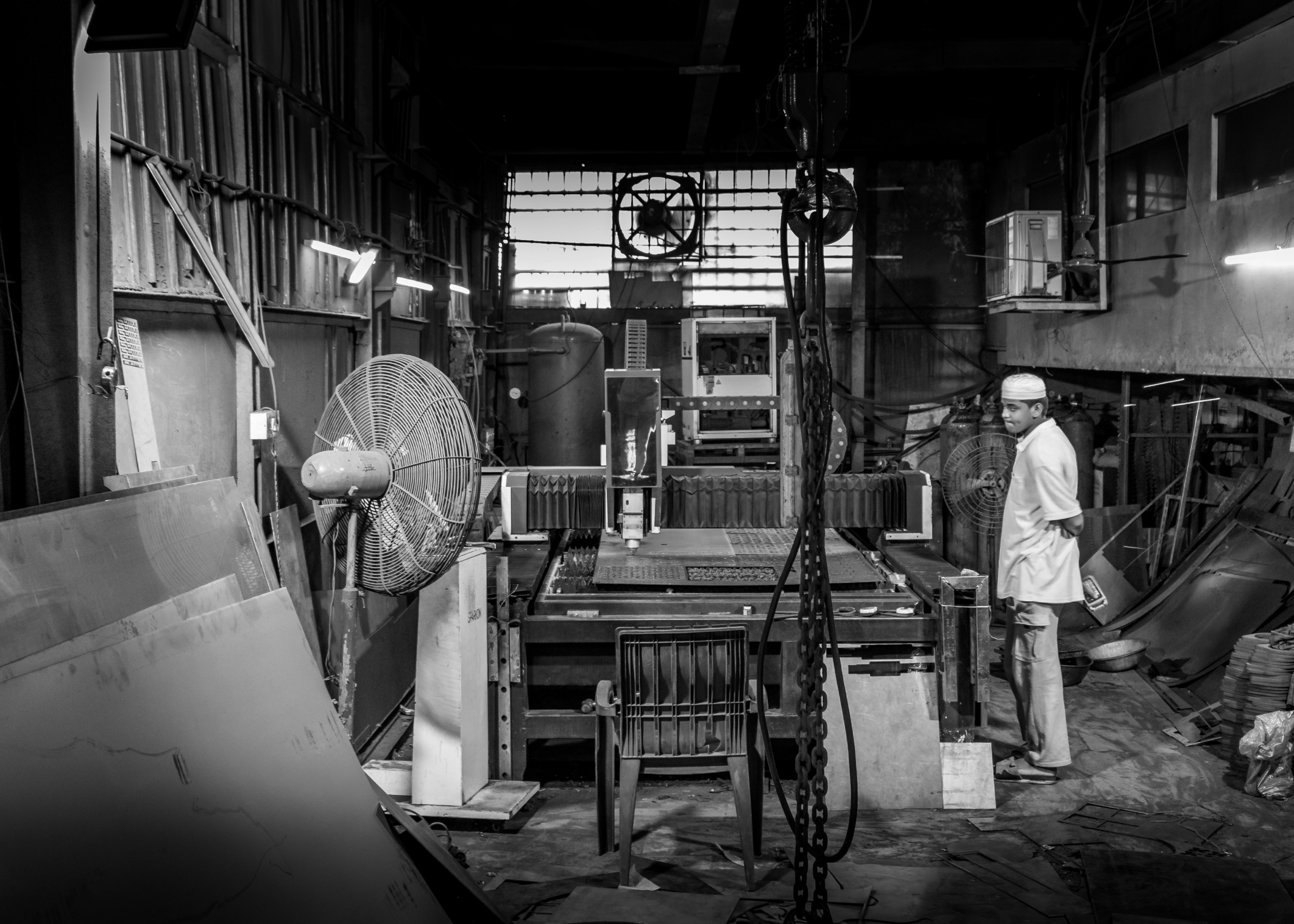
Why Manufacturing Language Is Losing Power — And Why Brand Language Is the Key to Enduring Through Cycles
Manufacturing language focuses on capacity, efficiency, and cost.
Brand language explains purpose, trust, and long-term value.
In earlier industrial stages, customers mainly asked whether a company could produce reliably. But as markets mature and supply exceeds demand, customers increasingly ask a different question: What does this company stand for?
Companies that can only describe what they produce compete on price and efficiency.
Companies that can explain why they produce build trust, relationships, and long-term differentiation.
A Founder’s Moment of Realization
Mr. Lee is the founder of a mid-sized manufacturing company. Thirty years ago, with a handful of machines and a group of hardworking employees, he built his factory step by step. Today, his products are exported to dozens of countries. It was an era when whoever could produce, produce faster, and produce cheaper would win. Riding the wave of China’s economic takeoff after Reform and Opening Up, his company became a leader in its sector. Orders were booked through the end of each year. Clients negotiated on price or pushed for faster delivery.
But recently, something has changed.
In the past, overseas buyers visiting the factory would ask: “Can you guarantee capacity? What’s your lead time?” Now, key supply chain partners and regional distributors ask different questions: “What does your brand stand for? What direction are you heading? What responsibility are you taking on?”
Faced with these questions, Mr. Li finds himself at a loss.
For decades, his factory has run on a well-developed manufacturing system. The metrics are solid. The efficiency is measurable. The certifications are in place. He has always described his business in the language of manufacturing: how many advanced machines they operate, how many international certifications they hold, how many percentage points ahead they are in efficiency.
But what clients are now asking about belongs to a different dimension: trust, responsibility, shared values. They no longer want to know only what you can do. They want to understand why you do it.
01. The Ceiling of Manufacturing Language
The logic of manufacturing language is simple: capacity, technology, efficiency. In the early stages of industrial growth, these were decisive advantages. Supply was scarce. Customers were willing to pay for the fact that something could be made at all.
But when supply far exceeds demand, that language hits a ceiling.
It proves functionality, but it lacks values.
It supports transactions, but struggles to build relationships.
It solves for today, but fails to describe tomorrow.
In simple terms:
Manufacturing language answers “Can you make it?”
But it cannot answer “Why should it exist?”
02. The Power of Brand Language
Brand language is not a slogan.
It is the narrative that connects a company’s capabilities, values, and long-term direction.
Through this narrative, customers, employees, and society begin to see something different: not only a company that manufactures products, but a company that plays a meaningful role in the world.
In our observations, companies that successfully upgrade their brand strategy often show three shifts.
From transactions to relationships
An industrial components company redefined itself from a “parts manufacturer” to a “guardian of safety systems.” Clients stopped comparing prices alone. They began forming long-term partnerships based on trust.
From Product to Experience
An equipment maker stopped focusing solely on performance metrics. Instead, it emphasized how it helps clients reduce downtime and operate more sustainably. Customers began to see holistic value rather than a single piece of machinery.
From efficiency to meaning
Operational advantages were reframed:
Efficiency became energy savings.
Scale became broader access.
Through a shift in language, manufacturing strengths take on broader social relevance.
This is the power of brand language. It does not change the reality of what you produce. It changes how the market understands you.
03. Why Transformation Is So Difficult
Many companies say they are “building a brand,” but they continue speaking the language of manufacturing.
They still emphasize:
-
faster production
-
better quality
-
lower cost
The message may appear new, but the underlying logic remains the same.
A deeper reason lies in history.
Many first-generation founders built their success thirty years ago under a very different environment. At that time, whoever could build capacity first and scale production fastest had the advantage.
That experience shaped their business instincts.
But markets have changed. Competition is more complex. Customer expectations are higher. Leading global companies have already shifted their narrative—from manufacturing proof to brand meaning.
Yet many business leaders still see brand as something cosmetic: a new logo, a redesigned website, or updated visual materials.
As a result, brand remains peripheral to the organization rather than becoming part of its strategic core.
This is why brand transformation is difficult.
It is not only about tools or marketing techniques.
It is about changing how a company understands itself.
04. From Manufacturing Narrative to Brand Narrative
To move forward, companies must shift the way they tell their story.
From “What we do?” to “Why we do it?”
Stop limiting communication to capability. Begin by clarifying intention. Is it to create a safer society? A greener environment? A more equitable partnership model? These answers form the starting point of brand.
Bring people to the center
Brand is not machinery. It is human connection.
The most powerful narratives come from people—employees, partners, customers, and the choices they make together.
From Parameters to Resonance
Technical specifications can be copied, shared values cannot. Strong brands do not win on comparison charts. They win in the minds and hearts of people.
05. Manufacturing Is the Root. Brand Is the Soul
Manufacturing remains essential. It is the foundation of a company’s existence.
But if a company speaks only the language of manufacturing, it can only prove capability.
Today, customers and society want to know more:
Who are you?
Why do you operate the way you do?
Manufacturing keeps a company alive. Brand allows it to endure.
Manufacturing is the root. Brand is the soul. Only when the two are integrated can a company truly move through cycles and build something distinctive and lasting.
This is not a communications issue. It is a strategic one.
The companies that go the distance are never defined solely by what they make. They are defined by how clearly they can explain why they make it—and what it means for the world.
Strategic Questions
What is manufacturing language?
Manufacturing language describes a company through its production capabilities—capacity, efficiency, certifications, and technical performance.
Why is manufacturing language losing relevance?
Because in mature markets, customers evaluate not only production capability but also a company’s values, responsibility, and long-term direction.
What is brand language?
Brand language connects what a company produces with purpose, trust, and long-term value.
Why does brand strategy matter for manufacturing companies?
Because brand strategy transforms manufacturing capability into lasting differentiation, allowing companies to compete on value rather than price.