EWAI-ICP-TOF-MS 3800
A Technology and Design Breakthrough: High-Performance Instrumentation, Made Visible
Environmental Testing Instrument Design
Client
-
East & West Analytical Instruments
Industry
-
Environmental Testing · Analytical Instruments
Service
-
Industrial Design
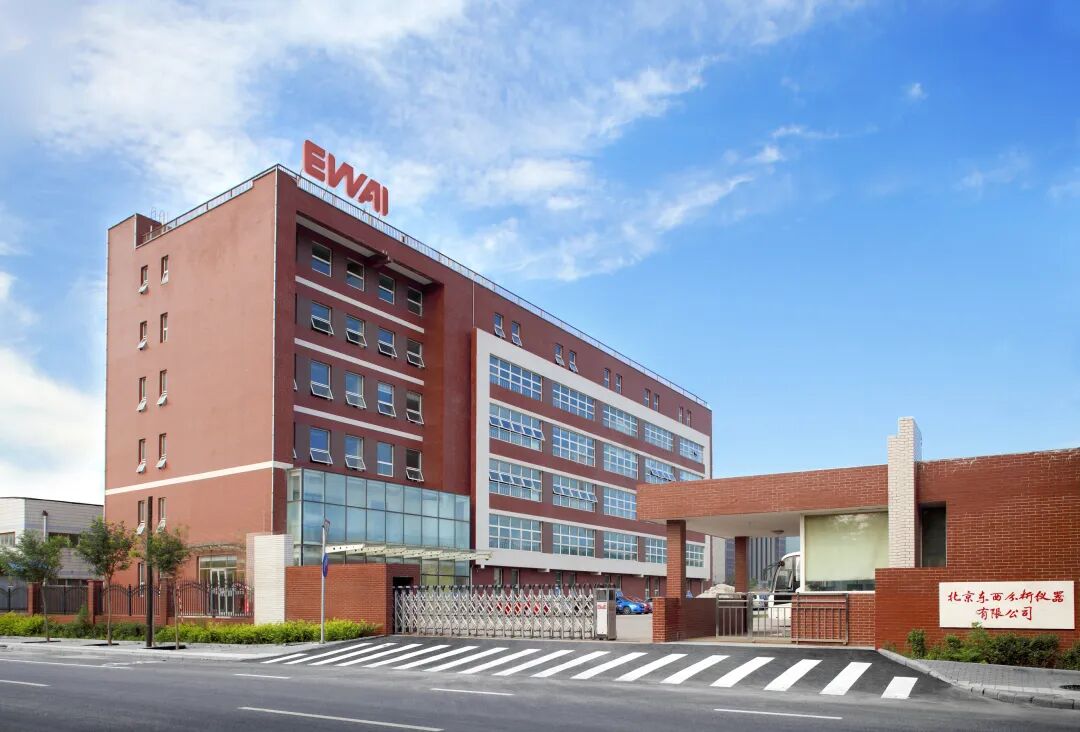
A Driving Force in China's Instrument Industry
EWAI is one of China’s earliest privately held analytical instrument companies. Its products serve agricultural research, food safety, coal mine safety, environmental monitoring, electronics, petrochemicals, and inspection and quarantine. Focused on high-end analytical technologies such as mass spectrometry, spectroscopy, and chromatography, the company combines deep technical expertise with sustained R&D capability, making it a driving force in China’s analytical instrument industry.
A New-Generation Tool for Environmental Testing: The EWAI ICP-TOF-MS 3800
As environmental monitoring demands ever greater precision and speed, EWAI launched the new-generation ICP-TOF-MS 3800, an inductively coupled plasma time-of-flight mass spectrometer that has become a genuine scientific workhorse for environmental testing. The instrument combines the efficient ionization of inductively coupled plasma with the full-spectrum, simultaneous detection of time-of-flight mass spectrometry, analyzing 20 elements in just 25 seconds at parts-per-trillion sensitivity, more than five times the throughput of a conventional quadrupole mass spectrometer. In applications ranging from drinking water safety assessment to industrial wastewater metal monitoring, it delivers outstanding performance and demonstrates how far domestically made instruments have advanced in this field.
Make Expertise Look Like Expertise
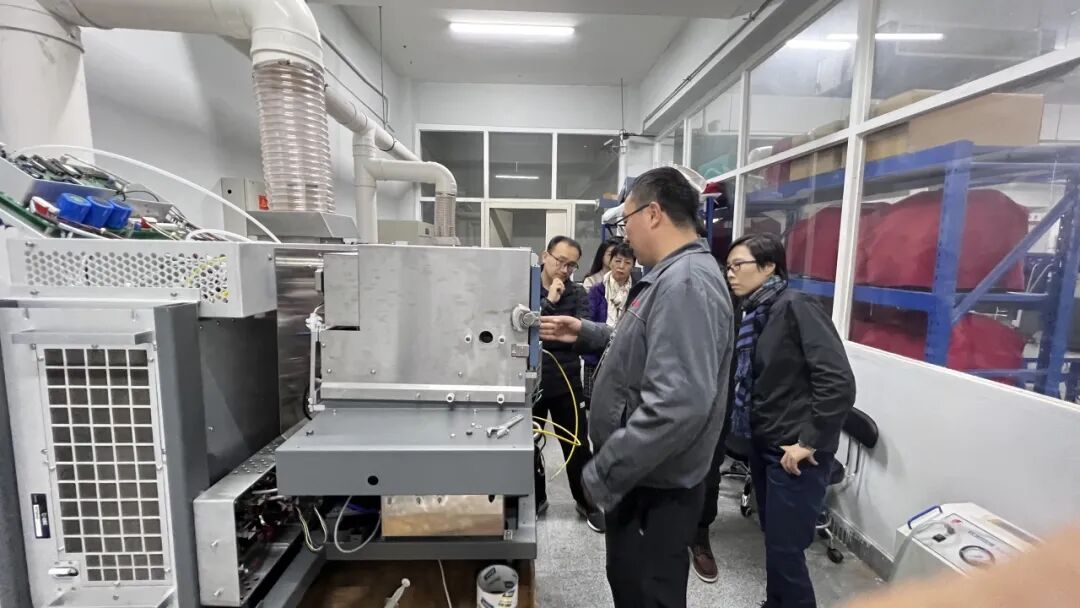
As the EWAI ICP-TOF-MS 3800 neared the end of its development cycle, taasdesign was brought in to lead a systematic overhaul of its industrial design. Our brief: turn a high-end instrument built to showcase its own performance into something more than a piece of cold laboratory equipment, a device that reads as advanced, carries clear brand identity, and holds up to years of daily use.
We recognized early on that this was never going to be a surface-level styling exercise. It was a systemic design challenge spanning structural logic, material selection, and the day-to-day user experience. Through close collaboration with the EWAI team and firsthand research on the ground, we worked through the demanding operating conditions and practical requirements this class of high-end analytical instrument actually faces in the field.
Our design work aimed to improve visibility and ease of operation without compromising performance stability, strengthen brand recognition, and create an overall impression that felt safer, clearer, and more professional. What we wanted was not simply an efficient scientific instrument, but a professional tool that users could understand at a glance, trust, and rely on for the long term.
Structure as Skeleton, Visual Language as Form
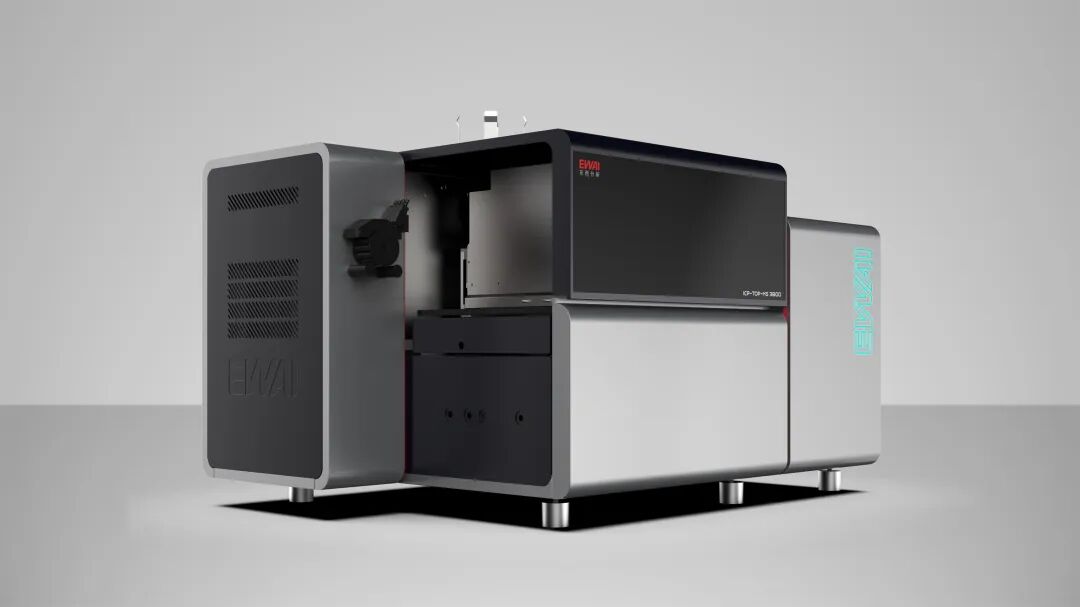
We began at the structural level, introducing a modular logic that divides the instrument into three functional sections. This makes the internal architecture easier to read and external maintenance far more convenient. To help users read the instrument’s working state at a glance, we redesigned the observation module with a full tempered-glass front panel and semi-transparent side panels for real-time visibility; in zones exposed to high heat and strong UV, we specified tinted glass and repositioned the viewing windows to balance safety with ease of operation.
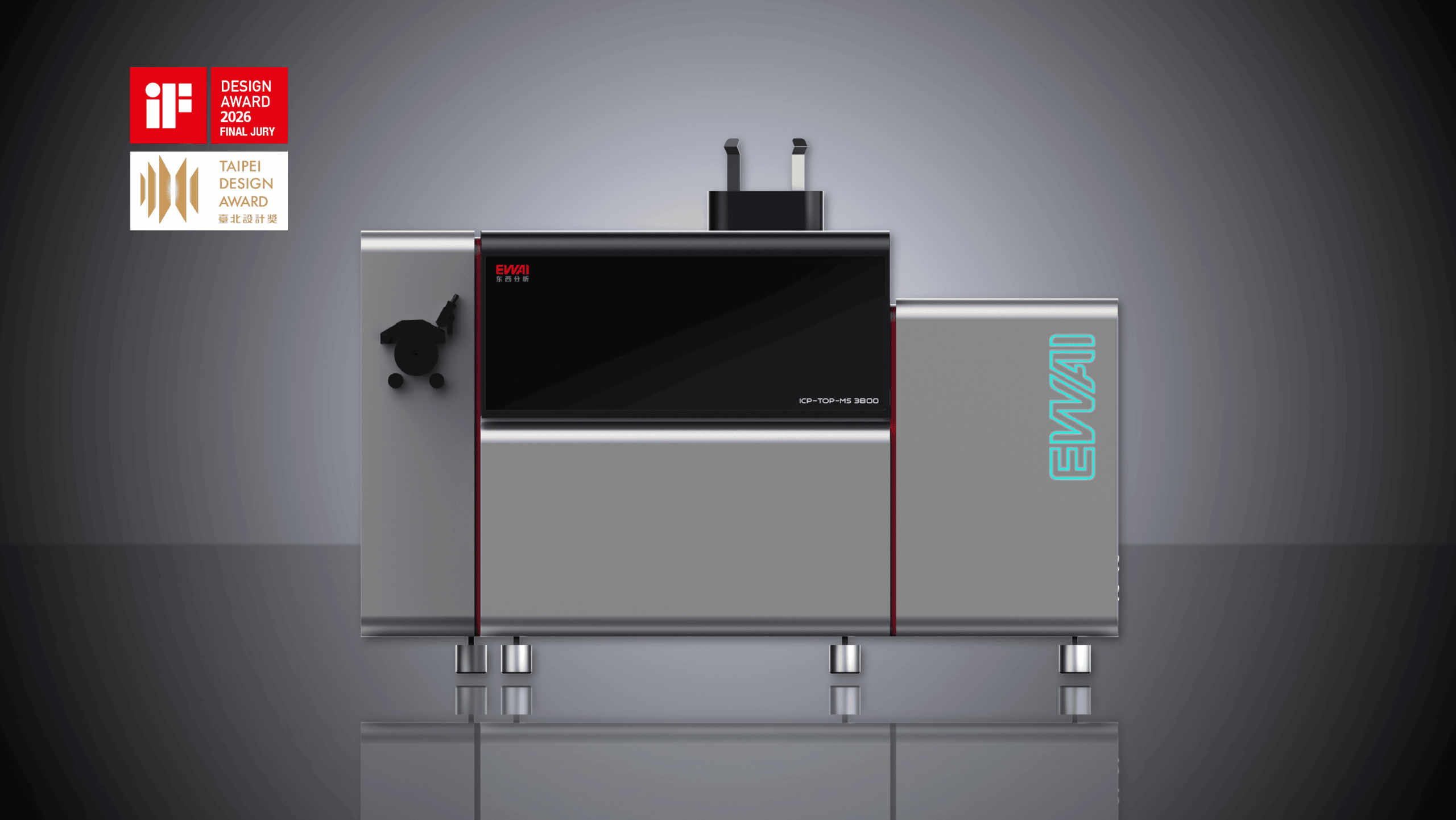
The visual language across the whole instrument is built around precision, efficiency, and trust. A signature EWAI red line runs across the three module joints, acting as a visual thread that ties the machine together, sharpening brand recognition while signaling that the complexity inside is fully under control. An illuminated logo module at the top lights up in sync with startup, giving users a clear status cue while reinforcing the brand at the same time.
design highlights
Design Features
Modular Exterior Structure
A three-part modular design strengthens structural logic and visual identity, simplifies routine maintenance and upgrades, and projects the efficiency and control expected of a professional instrument.
Enhanced Product Experience
A translucent side panel paired with a full tempered-glass observation window elevates the viewing experience while adding a modern, professional feel to the overall design.
Reinforced Brand Identity
A signature red line embedded at each of the three module joints creates a clear, consistent identity cue that strengthens brand recognition while conveying a premium feel.
Operational Safety and Brand Expression
An illuminated logo module lights up automatically when the device powers on, serving as both an operational cue and a brand statement that enhances interactivity and a sense of advanced technology.
Sustainable Focus
Sustainable Design, From Structure to Lifecycle
In the design of the EWAI ICP-TOF-MS 3800, sustainability is built into the material choices, the supply chain, and the product lifecycle.
On materials, the design is simplified around an aluminum panel structure that balances performance and durability while remaining highly recyclable. On the supply chain, priority goes to suppliers within the same city or nearby regions, shortening transport distances and reducing logistics-related carbon emissions. From design and manufacturing through everyday use, the product is built to last longer and consume fewer resources.

Beyond the performance breakthrough, these sustainable design choices set a new benchmark for the analytical instrument industry in green manufacturing and social value.
This commitment goes beyond the product itself. From material selection and assembly to daily operation and maintenance, every stage is designed to reduce environmental impact, so that precision performance and sustainable practice advance together rather than compete.
From material selection to product lifecycle, sustainability is built into every stage of the EWAI ICP-TOF-MS 3800’s design.
01
Local Supply Chain Collaboration
Local manufacturers are prioritized to lower transport-related carbon footprint and support the regional industrial ecosystem.
02
Zero-Plastic Structure
All plastic components have been eliminated from both the internal and external structure, reducing the use of non-biodegradable materials.
03
3R Principles in Practice
The design fully embraces the environmental principles of Reduce, Reuse, and Recycle.
04
Integrated Sheet-Metal Construction
The main structure uses a simplified sheet-metal design that balances durability with material efficiency.
05
Modular Structural Design
The modular structure supports quick disassembly and part replacement, extending product lifespan and reducing maintenance waste.
From Understanding Technology to Design Empowerment
For taasdesign, this was never a surface-level facelift. It was a systematic design practice built on a deep understanding of the underlying technology, in service of professional users, and aimed at building brand visibility. High-end scientific instruments are an industry that rarely starts from the user’s point of view, and through this collaboration we set out to explore a different possibility: that technology need not be a cold, purely functional data-processing tool. It can also carry warmth, logic, and a distinct identity.
Design empowerment, as we define it, happens when design truly understands the technology behind it and gives that technology a voice through precise visual language. We are proud and grateful to see the EWAI ICP-TOF-MS 3800 become one of the notable milestones for Chinese-made analytical instruments stepping onto the international stage.