
EWAI AA-7095
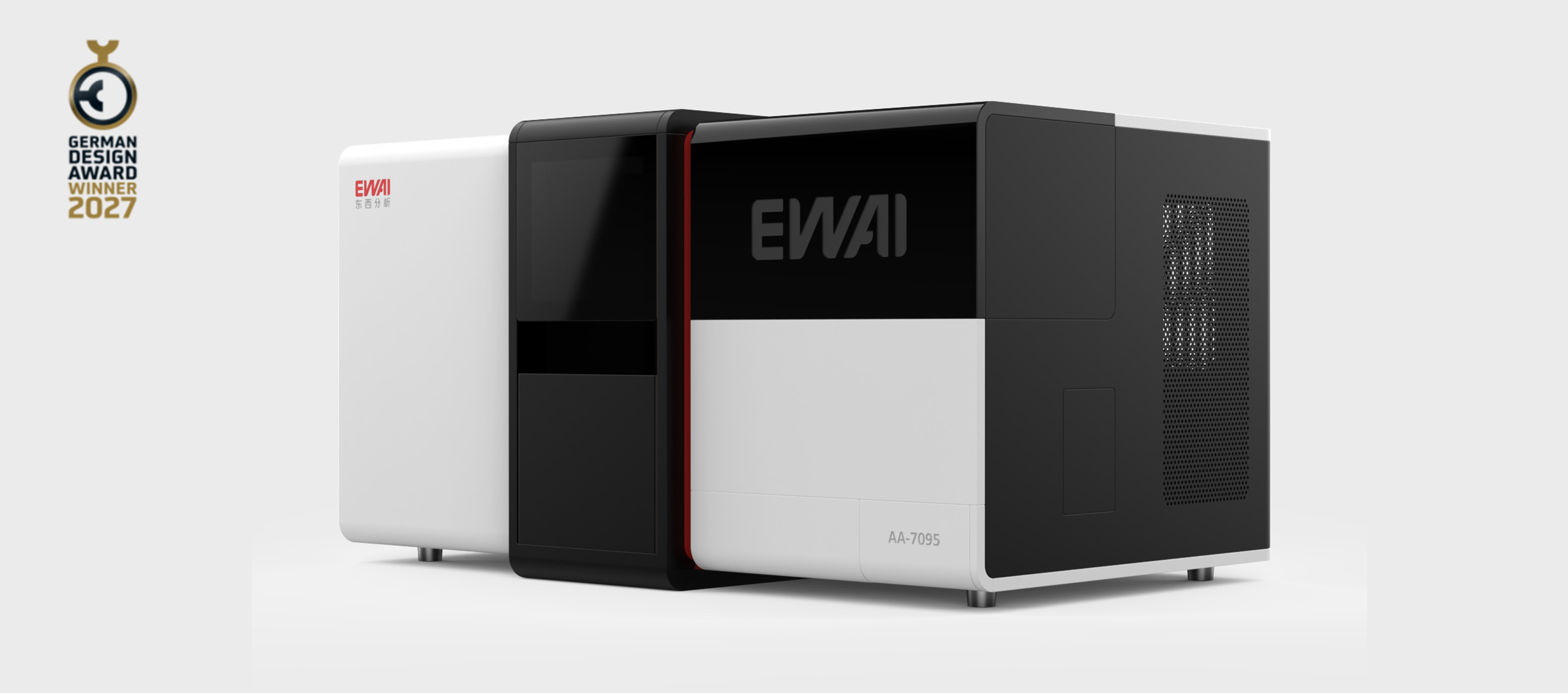
Taasdesign developed a new industrial design for the EWAI AA-7095 Atomic Absorption Spectrophotometer, replacing the visual complexity of conventional mechanical structures with a clearer sense of order. The signature red line from EWAI’s visual identity was extended onto the product itself, giving this technologically advanced analytical instrument a distinctive and recognisable professional presence. The project received a German Design Award 2027 Winner recognition.
Expressing Precision Through Order
Client
-
East & West Analytical Instruments
Industry
-
Environmental Testing · Analytical Instruments
Service
-
Industrial Design
Award
-
German Design Award 2027 Winner
From Technological Breakthroughs to Design Expression
EWAI is among China’s earliest privately owned analytical instrument manufacturers. Its products are widely used in agricultural research, food safety, coal mine safety, environmental monitoring, electronics, petrochemicals and customs inspection. The company has long focused on three core technology areas: mass spectrometry, spectroscopy and chromatography. In recent years, EWAI has continued to advance the development of high-end analytical instruments, achieving technological breakthroughs in environmental monitoring, food safety, life sciences and materials research.
The AA-7095 represents a convergence of these efforts. It features an eight-position fixed light source system, a horizontally heated graphite furnace, and dual background correction combining a longitudinal AC magnetic field Zeeman system with a deuterium lamp. Together, these technologies significantly enhance the graphite furnace’s background correction performance.
As technological complexity increases, continuing to rely on conventional visual language risks creating a disconnect between the instrument’s appearance and its actual capabilities. This became the starting point for the industrial design: rather than simply adding a new aesthetic to the instrument, the aim was to bring its form into alignment with its technological sophistication.
Rethinking the Visual Language of Professional Instruments
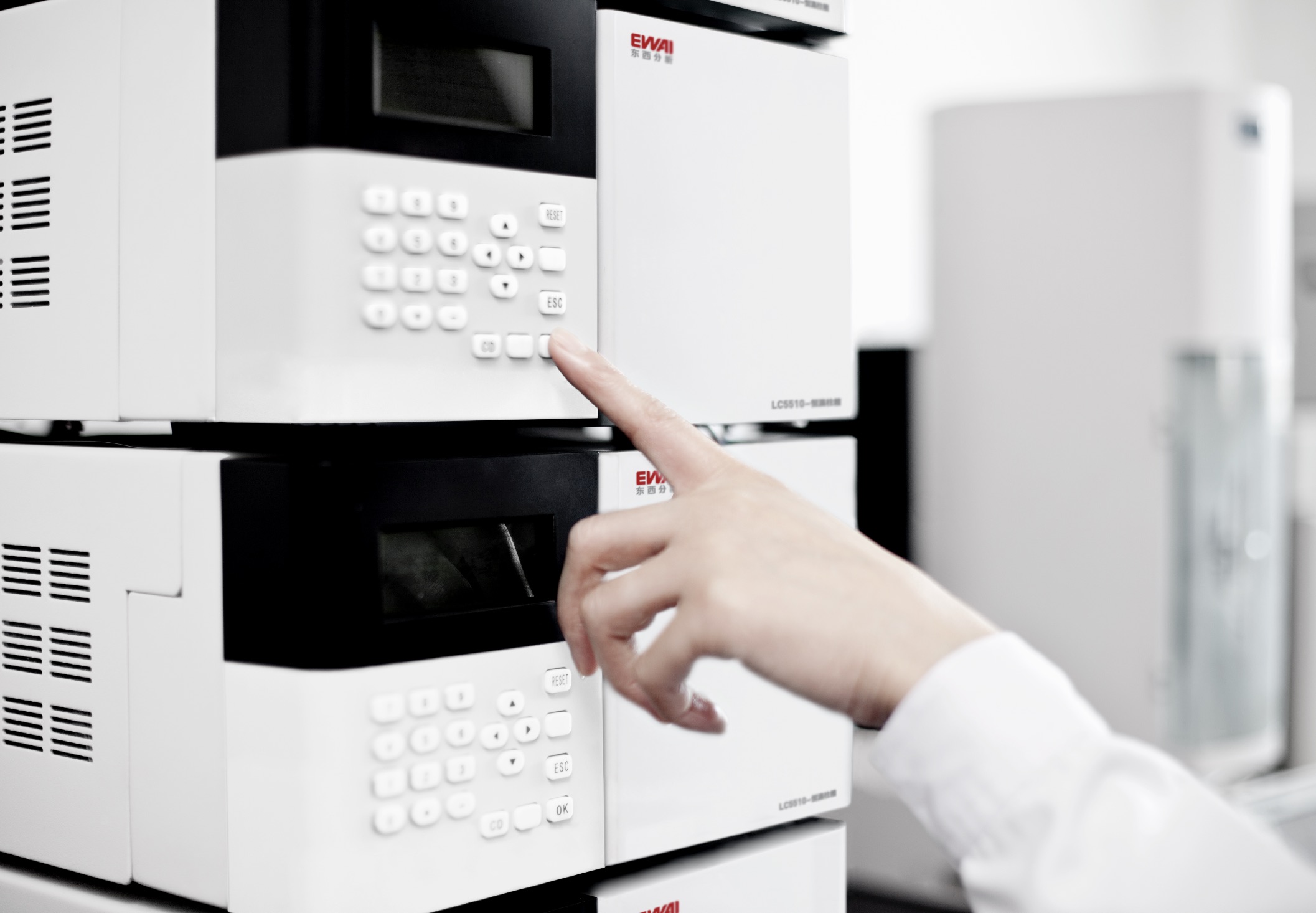
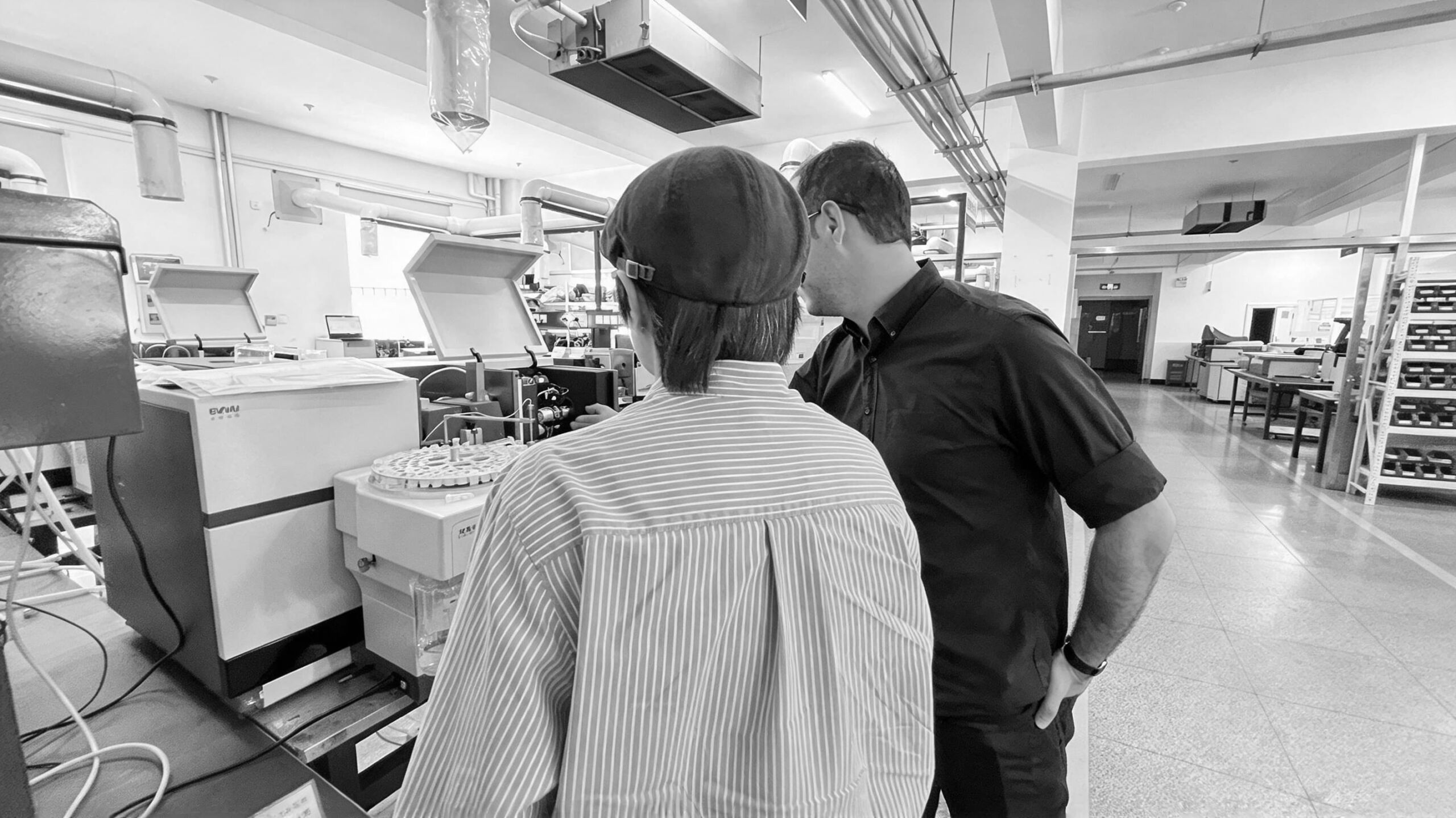
Laboratory instruments have traditionally followed an established visual language: mechanical structures are left exposed, functional modules are clearly delineated, and doors, panels and controls each maintain their own visual identity. This approach has its historical rationale — visible mechanics once served as a visible assurance of reliability.
As instrument technology continues to evolve, however, increasingly sophisticated systems are integrated into internal structures and precision controls, opening up new possibilities for product design. Beyond revealing how a device is constructed, there is now greater scope to consider how different functional modules can be brought together, visual distractions reduced, and products made more intuitive for users to understand.
For the AA-7095, we sought to explore a more unified design language. Rather than making a domestically developed instrument look more like an imported one, the design draws on the product’s own technological characteristics and EWAI’s brand identity to establish a visual order that is clear, cohesive and distinctive.
Clean Geometric Volumes
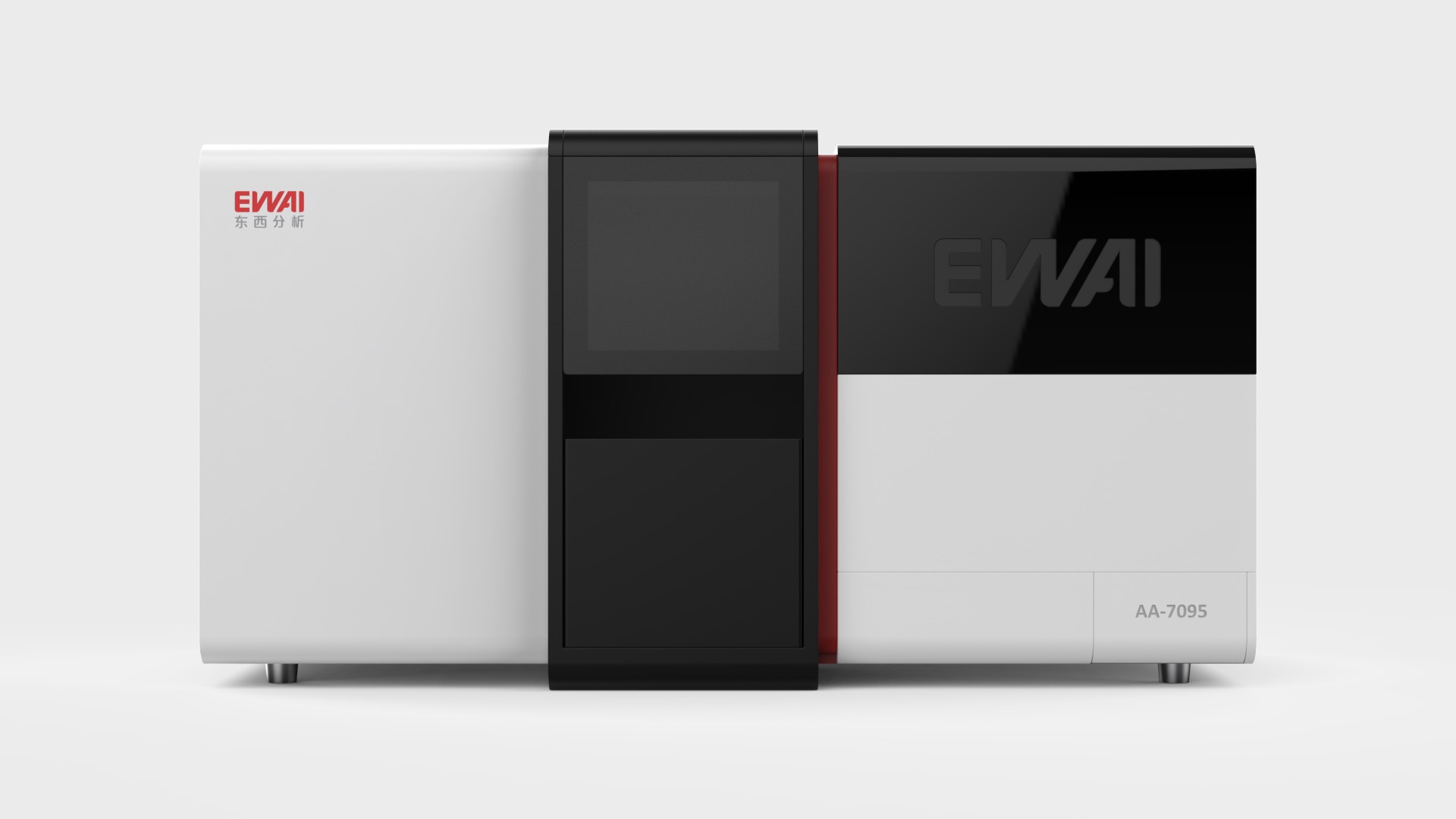
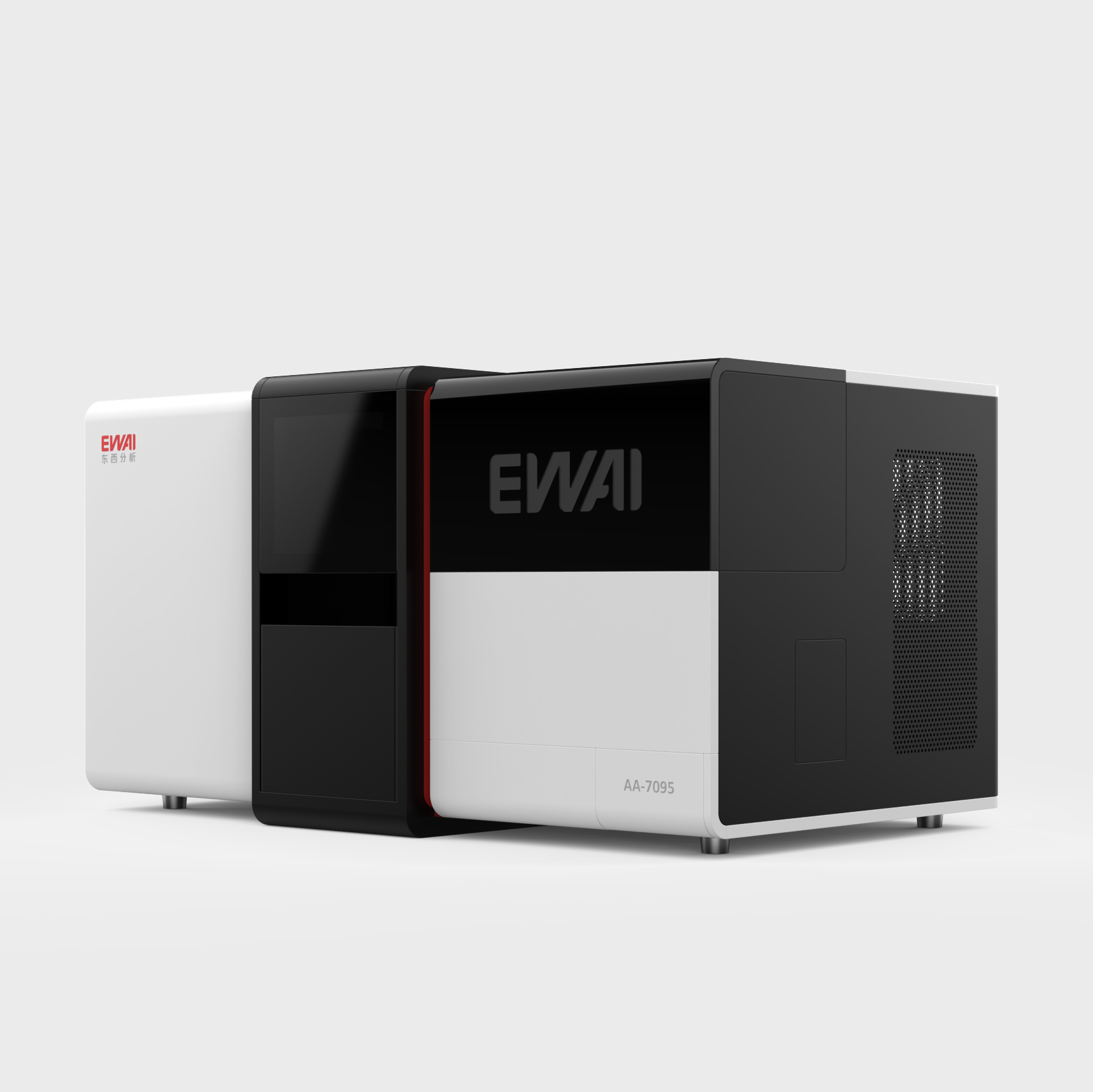
The first step was to simplify. The AA-7095 features a highly integrated outer enclosure, with clean geometric volumes defining its overall form. All module doors and panels are seamlessly integrated into a single, flush surface. Components that once competed for visual attention are brought together within one continuous façade.
The colour palette is deliberately restrained, with black and white as the dominant tones. Material differentiation takes the place of contrasting colour blocks. The construction logic was also reconsidered: the side covers are divided into three sections, while the central module consists of two components. Panel joints are positioned according to structural requirements rather than manufacturing convenience alone. This approach accommodates the practicalities and costs of sheet metal fabrication while allowing the joints themselves to contribute to the overall visual order.
The result is not simply a simpler appearance, but a clearer one. The instrument integrates naturally into contemporary laboratory environments while retaining a distinct professional presence. Its visual authority comes from structure and order, rather than decoration.
A Red Line Connecting Function and Brand Identity
The red accent line along the side of the instrument is one of the most restrained yet effective elements of the design. Running along the side of the enclosure, it creates a subtle contrast between colour and material, visually distinguishing a functional area from the continuous black-and-white surface.
This line is not an arbitrary addition. It draws directly on the red linear motif in EWAI’s visual identity, translating a brand element originally developed for two-dimensional communications into a three-dimensional product detail. Through the contrast of colour and material, the red line establishes a visual focal point while creating a connection with the light source area.
For an atomic absorption spectrophotometer, the light source marks an important starting point in the analytical process. By visually linking the red accent with this functional area, the design creates a natural relationship between brand identity and product functionality. Rather than relying on repeated logos to assert the brand’s presence, a single distinctive detail establishes a closer connection between the instrument’s appearance and its visual identity.
Improving the User Experience Through Structural Details
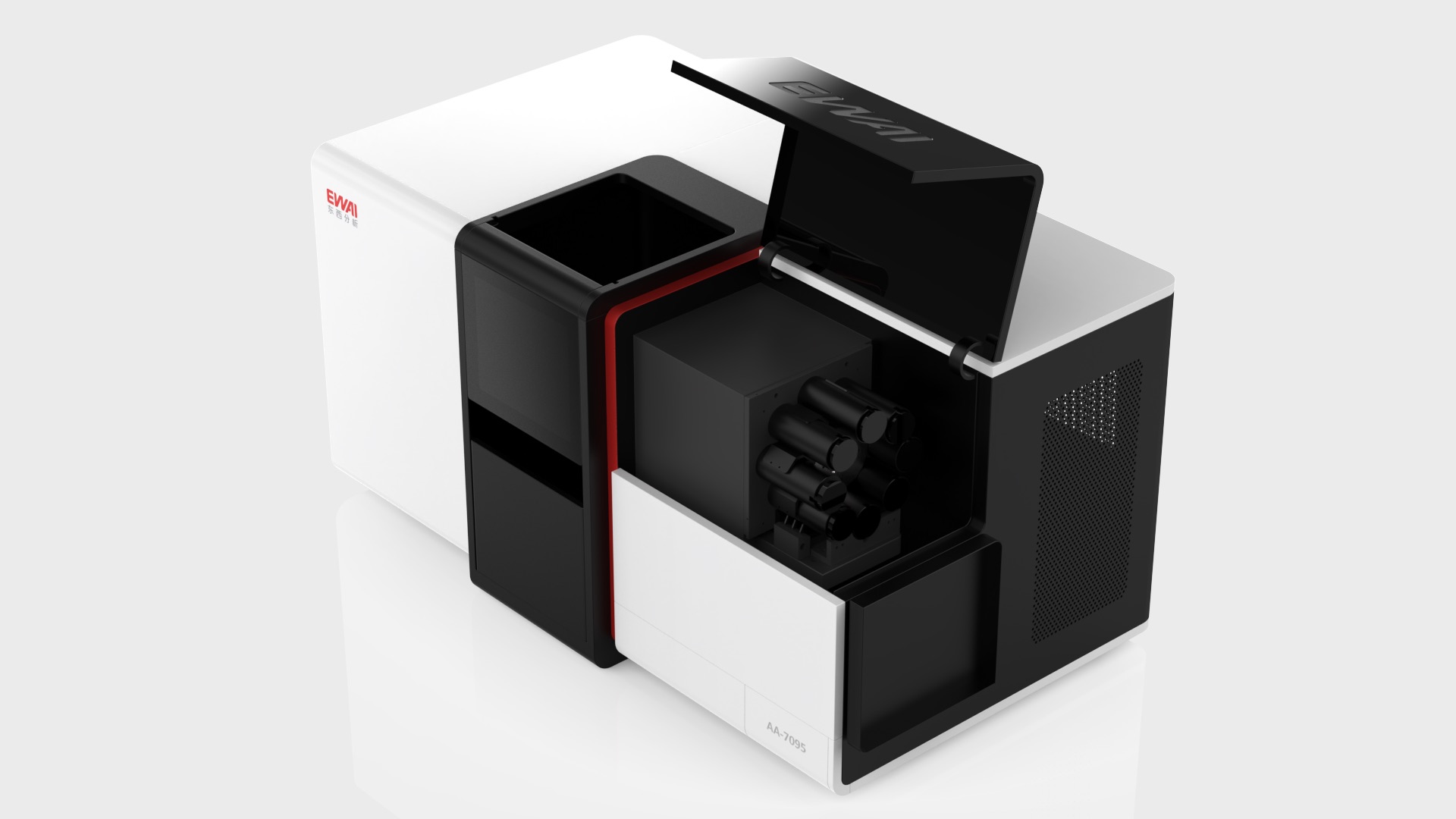
The design of precision instruments is not solely about visual presentation. It must also address the practical demands of everyday operation and maintenance. On the AA-7095, the light source compartment features an upward-opening door. Once raised, it provides a more open view of the interior and a more accessible working angle, making routine inspection and maintenance easier for users.
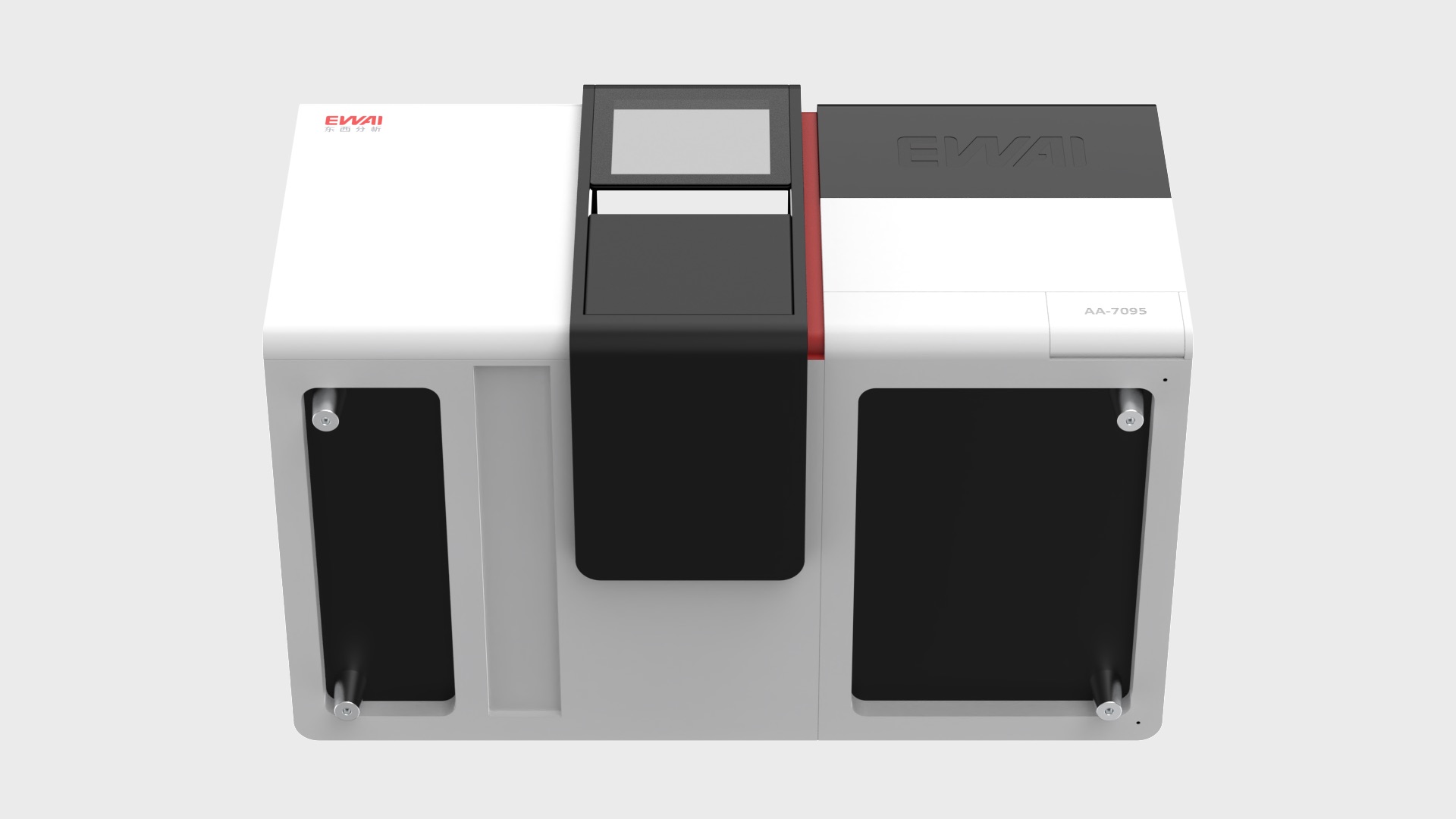
The power control area and service panels are also integrated flush with the main enclosure. This maintains the instrument’s clean overall appearance while ensuring convenient access for operation and maintenance. Recessed lifting areas at the base of the instrument provide more ergonomic handholds when moving the equipment.
These details do not call attention to themselves through elaborate styling, yet they have a direct impact on the user experience. By starting with real operational scenarios, the design brings visual simplicity and functional considerations into a coherent whole.
From a Single Instrument to an Extensible Design System
The AA-7095 is more than an isolated design solution. Through its modular architecture, clearly defined functional zones and consistent design elements, it establishes a visual language that can be carried forward and adapted across future products. The logic of panel joints, the curvature of rounded corners, the placement of red accents and the rhythm of openings can all be carried into subsequent designs.
For EWAI, this means that expanding its product portfolio does not require starting from scratch each time. Brand recognition can accumulate through the instruments themselves, rather than relying on the repeated application of logos. The value of a design system lies in its ability to accommodate future products, not simply to define the appearance of a single instrument today.
Looking back on the project, the AA-7095 offers an answer that is measured rather than radical. It does not announce innovation through exaggerated forms, nor does it conceal complexity behind decorative elements. Instead, it expresses innovation through clarity, precision and structural order.
When an instrument no longer needs exposed mechanical components to demonstrate its capabilities, users can direct their attention back to operation and analysis. The value of design lies in translating technology into a form that inspires confidence, allowing professionals to focus on what they do best.
This also reflects a broader shift taking place in China’s high-end scientific instrument industry: moving beyond the question of whether a product works, towards demonstrating why it deserves to be seen. The AA-7095 is one example of this evolution, and the design language it establishes will continue to develop.